
If you're working with research peptides, stability and storage aren't optional details—they're the foundation of reproducible results. Get the temperature wrong, expose your vial to moisture, or ignore freeze-thaw cycles, and you're looking at measurable degradation before your experiment even starts. Here's what you actually need to know about research peptide stability and storage to keep your compounds viable and your data reliable.
Temperature Standards for Research Peptides
Temperature is your first line of defense. Where you store your peptides directly determines how long they remain stable and usable.
Related: Lyophilized Peptide Vial Storage: Complete Guide
Related: How to Verify Peptide Purity with HPLC: The Complete Guide
Lyophilized (dry) peptides are your most stable option. Store them at -20°C in sealed vials—that's the standard recommendation for long-term storage. At this temperature, you're looking at months to years of stability, depending on the specific peptide and your storage conditions. Dry peptides can sit at room temperature for a few days or even weeks in a pinch, but that window closes fast once you're past the first week.
Reconstituted peptides demand colder conditions. Once you mix your peptide into solution, the game changes. Store reconstituted peptides at -20°C or lower—and for longer storage periods, -80°C is your preferred option. That's the deep freezer range. Reconstituted peptides sitting on the bench at room temperature will degrade noticeably within hours, so if you need your compound stable for weeks or months, cold storage is non-negotiable.
When you're working through daily protocols and brief room-temperature exposure is unavoidable, that's fine. Just make sure your vials get back into cold storage fast. The key is keeping total room-temperature time as short as possible.
Shelf Life of Reconstituted Research Peptides
Reconstituted peptides don't last as long as their dry counterparts, and that's something to plan for in your workflow.
If you reconstitute a peptide and store it properly at 2-8°C (refrigerator temperature), you're looking at a typical shelf life of 30 to 60 days. That's a useful window for most active research projects. But that timeline assumes you're storing it sealed, keeping contamination out, and minimizing opening the vial.
Extend your storage to -20°C freezer storage, and you can push that window several months, depending on the peptide sequence and buffer composition. Go to -80°C ultra-low freezer storage, and stability extends even further—often into the 6-12 month range or beyond for most peptides.
The trade-off is convenience. Deeper cold storage requires more infrastructure and takes longer to access. But if you're running long-term studies or need your compounds to stay viable across multiple experimental phases, the investment pays off. Echelon Labs supplies peptides with detailed stability data and storage recommendations specific to each batch, so you know exactly what timeline you're working with before you even open the vial.
Critical Storage Factors That Affect Peptide Degradation
Temperature tells only part of the story. Several other factors either speed up or slow down degradation.
Buffer selection matters more than most researchers realize. The pH, salt concentration, and chemical composition of your reconstitution buffer directly impact how fast your peptide breaks down. Some buffers are formulated to minimize oxidation and hydrolysis—others are neutral but don't actively protect the compound. When you're planning storage, match your buffer to your timeline. If you're storing for months, a stabilizing buffer is worth the extra step.
Moisture is your enemy. Water contamination in a sealed vial—even tiny amounts—accelerates degradation in solid peptides. Keep your dry peptide vials sealed until you're ready to use them. If you open a vial and don't immediately reconstitute, reseal it. Ambient humidity can creep in faster than you'd think.
Freeze-thaw cycles compound damage. Every time you thaw a frozen vial, use what you need, and refreeze, you're stressing the peptide molecules. Ice crystals form and break apart. Proteins denature. Chemical bonds weaken. If you can avoid repeated freeze-thaw cycles, do it. If you know you'll need multiple aliquots, divide your peptide into smaller vials upfront so you can thaw one at a time without touching the rest.
Light exposure matters too. Some peptides are photosensitive. Store vials in the dark or in opaque containers. It's a small detail that makes a measurable difference over months.
Best Practices for Handling and Storage
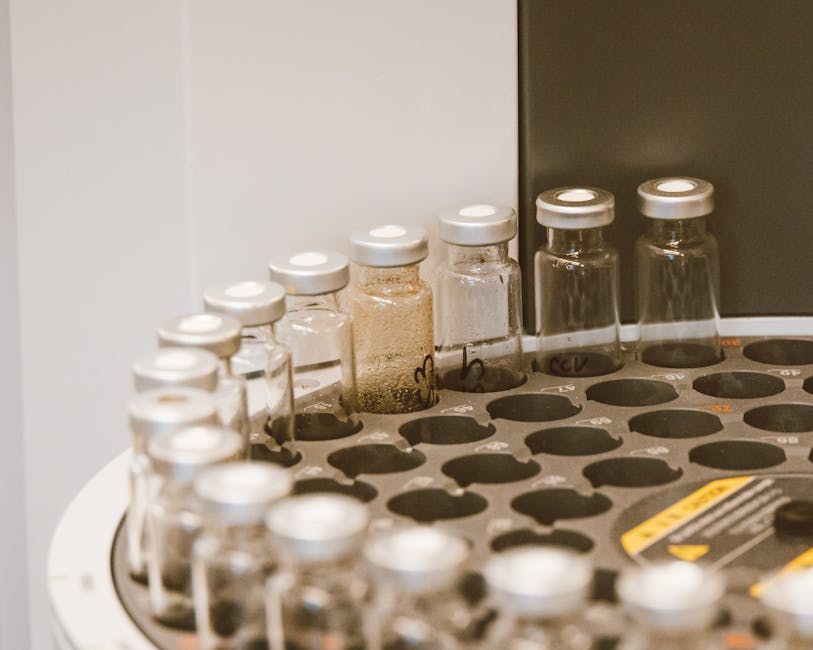
Knowing the theory is one thing. Actually executing proper storage is another. Here's what your workflow should look like.
Warm vials before opening. If your peptide has been in the freezer, let it come to room temperature before you break the seal. Why? Condensation. Cold vials exposed to warm air immediately develop moisture on the outside—and if that moisture seeps in when you open the cap, you've just contaminated your compound. Give it 15-20 minutes to equilibrate.
Minimize freeze-thaw. Plan your aliquoting strategy in advance. If you know you'll run five separate experiments over the next three months, split your peptide into five smaller vials now instead of repeatedly accessing one large vial. This is why working with a supplier that offers flexible batch sizes and aliquoting options matters—you can structure your order around your actual workflow, not squeeze your workflow around a single large vial.
Keep detailed storage logs. Note the date you received the peptide, the date you reconstituted it (if applicable), the temperature at which it's stored, and how many times you've accessed it. This information matters when you're troubleshooting unexpected results weeks or months later. It also helps you make decisions about whether to trust an older batch for critical experiments.
Use vacuum-sealed or inert-atmosphere vials when possible. Some peptides come packaged in vials flushed with nitrogen or sealed under vacuum. This extra step significantly extends stability by removing oxygen, which causes oxidative degradation. It costs a bit more upfront but pays off if you're storing for extended periods.
Check your freezer regularly. Make sure your -20°C or -80°C freezer is actually holding temperature. Temperature fluctuations—especially if your freezer cycles wildly or has defrost cycles that briefly warm everything up—will shorten shelf life. A cheap wireless thermometer that logs temperature over time is a worthwhile investment.
Understanding Peptide Degradation Over Time
Degradation isn't binary. Your peptide doesn't go from "perfect" to "useless" overnight. It's a gradual process, and understanding what's happening helps you make informed decisions about storage.
Peptides degrade through hydrolysis (water breaking peptide bonds), oxidation (oxygen attacking vulnerable amino acids), and deamidation (side-chain modifications). All three processes happen faster at higher temperatures, higher pH, and in the presence of light or trace metals. Cold storage slows all three dramatically.
Reconstituted peptides degrade faster than dry peptides because everything in solution reacts faster than solid-state molecules. That's why reconstituted peptides have shorter shelf lives even at -20°C or -80°C. The solvent itself becomes part of the problem.
This is also why batch documentation and Certificate of Analysis (COA) data from Echelon Labs include stability projections. You're not guessing. You have actual data showing how that specific batch degrades over time under standard storage conditions.
Common Storage Mistakes and How to Avoid Them
Most researchers know the basics but still make small errors that add up.
Mistake #1: Storing dry peptides in the regular refrigerator. Your 4°C fridge is not cold enough for long-term storage. You need -20°C minimum, ideally -80°C for anything over a few weeks. The regular fridge is only useful for reconstituted peptides, and only for short windows.
Mistake #2: Reconstituting too much too soon. You make a big batch of reconstituted peptide because it's convenient, then watch it degrade over two months. Better approach: reconstitute smaller amounts more frequently. Yes, it requires more vial openings, but you're protecting the bulk of your supply.
Mistake #3: Ignoring COA recommendations. Your supplier gives you specific storage guidance based on that batch's chemistry. Follow it. If the COA says store at -80°C, don't argue—that recommendation exists because -20°C storage showed measurable degradation in testing.
Mistake #4: Transferring between containers. Every time you move peptide from one vial to another, you risk contamination, moisture exposure, and oxidation. Store in the original vial whenever possible. Only transfer what you need for immediate use.
Why Documentation Matters for Your Research
This all comes back to reproducibility. If your peptide degrades mid-experiment and you don't know it, your results become unreliable. Your controls fail. Your data becomes questionable.
That's why Echelon Labs emphasizes third-party testing and batch traceability. Every batch comes with documentation that tells you exactly what you received and how to store it. When you buy from a supplier that prioritizes clarity over marketing, you get the information you need to make smart storage decisions.
Keep your COA. Store it with your sample or digitally. Reference it when you're planning your experiment timeline. This small act of documentation connects your storage practices directly to your research integrity.
How long can I store reconstituted peptides at -20°C?
At -20°C, reconstituted peptides typically remain stable for several months to over a year, depending on the specific peptide sequence, buffer composition, and storage conditions. However, optimal stability usually tops out around 6-12 months. For maximum shelf life beyond that, -80°C ultra-low freezer storage is better. Check your peptide's COA for exact stability projections.
Can I store dry peptides at room temperature?
Dry peptides can tolerate room temperature for days or a few weeks in a sealed, dry container, but long-term storage at room temperature will cause measurable degradation within weeks. For any storage period beyond a month, -20°C or -80°C freezer storage is necessary. Room temperature is only acceptable for very short-term workflows.
Does opening a vial multiple times damage the peptide?
Yes, each opening exposes the peptide to air (oxidation), moisture (hydrolysis), and light (photodegradation). Repeated freeze-thaw cycles from accessing a frozen vial multiple times also stress peptide molecules. Best practice: divide your peptide into smaller single-use aliquots upfront, so you minimize vial openings on your main stock.
What happens if my frozen peptide thaws accidentally?
A single thaw cycle typically isn't catastrophic, but it will accelerate degradation slightly. Return the vial to the freezer as quickly as possible. However, repeated accidental thaws will noticeably shorten shelf life. If this happens regularly, consider splitting your supply into smaller portions so you only thaw what you need. Keep your freezer temperature stable and monitor it with a thermometer to prevent thermal stress.