
Peptide stability testing and storage conditions are foundational to reliable research. If your peptides degrade between the time you receive them and when you use them, your experiments suffer—and you won't know why until you've already wasted time and resources.
The good news: proper storage is straightforward once you understand what your peptides actually need.
Temperature Ranges Matter More Than You Think
Your peptides have different stability profiles depending on how and where you store them. There isn't one universal temperature that works for every compound.
Most peptides fall into one of three storage brackets:
- Refrigerated (2-8°C): Common for peptides that need regular access or shorter-term storage. This range slows degradation without requiring extreme equipment.
- Room temperature: Suitable only for specific peptides with inherent stability. This is rare and should only be used if your peptide's documentation explicitly permits it.
- Frozen (-20°C to -80°C): The gold standard for long-term stability. Ultra-low freezer storage at -80°C provides optimal preservation for most research peptides.
The colder you go, the slower the chemical reactions that break down your peptide chains. That's why -80°C is preferred when you're storing compounds for months or years.
How Trifluoroacetic Acid Protects Your Peptides
When peptides are dissolved in solution, they're more vulnerable to degradation. One proven way to slow this process is storing them in trifluoroacetic acid (TFA) at a 0.1% concentration.
TFA works by creating an acidic environment that inhibits microbial growth and reduces certain chemical reactions that degrade peptide chains. If your peptide is supplied in TFA solution and your storage temperature is between 4°C and -80°C, you're giving your compound the best practical protection available.
Not all peptides come in TFA solution, though. Echelon Labs provides clear documentation with every batch about what solvent your peptide is in and which storage method is optimal for that specific compound.
Environmental Factors That Degrade Peptides
Temperature is just one piece of the puzzle. Your storage environment matters just as much.
- Moisture: Water exposure causes hydrolysis, which breaks peptide bonds. Keep containers sealed and avoid repeated freeze-thaw cycles that introduce condensation.
- Light exposure: UV and even ambient light can trigger chemical degradation in some peptides. Store in opaque containers or in darkness when possible.
- Oxygen: Oxidation degrades peptide sequences over time. Sealed, airtight containers protect against this.
- Temperature fluctuations: Constant small changes in temperature stress the peptide structure. A stable freezer is better than a fluctuating one.
This is why controlled storage environments are essential. A dedicated research freezer that maintains consistent temperature is worth the investment if you're running ongoing experiments.
Testing Your Peptides Before and After Storage
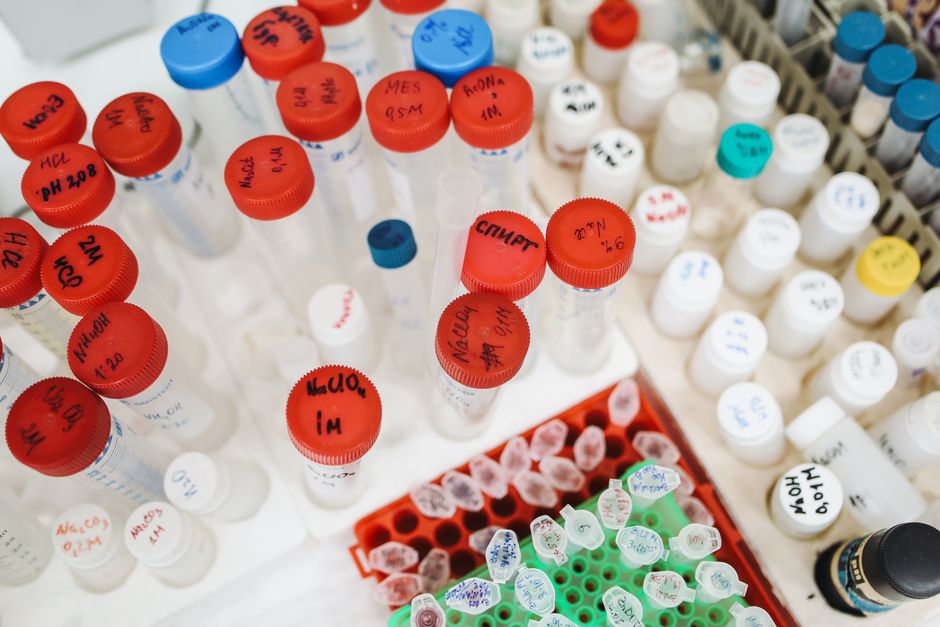
Stability testing isn't just about following storage guidelines. It's about verifying that your peptides are actually intact when you need them.
Related: Peptide Batch Reproducibility Testing Protocol: A Lab Guide
Before use: Request a Certificate of Analysis (COA) with your peptide delivery. This documents the purity, composition, and potency of the compound as it was tested immediately after synthesis. This becomes your baseline.
After storage: If you're keeping peptides long-term, consider running your own stability checks at key intervals, especially if the peptide is critical to your research. High-performance liquid chromatography (HPLC) can tell you exactly whether your stored peptide has degraded.
Related: Research Peptide Stability and Storage: Complete Guide
The goal is knowing with certainty that the peptide you're using matches what you received. Degradation can be subtle—your compound might look fine but have lost potency or developed impurities that skew your results.
Batch Traceability and Documentation
Here's what separates careful labs from ones that cut corners: they track everything.
When you receive peptides, record:
- Batch number and synthesis date
- Storage location and temperature setting
- COA reference number and date received
- Any access dates if the container is opened
- Visual changes (color, crystallization, texture)
If something goes wrong later—contamination, unexpected results, stability issues—you have a clear record of conditions and handling. This matters for regulatory compliance and for troubleshooting experimental failures.
When you source from Echelon Labs, batch traceability and COA documentation come standard. Each peptide arrives with the information you need to store and monitor it properly.
Common Mistakes in Peptide Storage
Freeze-thaw cycling: Every time you take a peptide out of the freezer, warm it, and refreeze it, you damage the structure. Remove only what you need in one session.
Storing in the wrong form: Lyophilized (powder) peptides are more stable than dissolved ones. If your peptide comes as a powder, keep it that way until you're ready to use it.
Ignoring storage instructions: Your peptide's documentation tells you exactly what temperature and conditions it needs. That's not a suggestion—it's the result of stability testing by the supplier.
Using a standard kitchen freezer: These cycle temperatures constantly and don't hold -80°C. They'll work in a pinch for short-term storage, but a lab-grade freezer is non-negotiable for serious work.
Assuming all peptides store the same way: They don't. A peptide with high methionine content degrades faster than others. A peptide prone to aggregation needs different handling than a stable linear sequence. Always reference the specific guidance for your peptide.
Setting Up Your Storage Protocol

If you're new to peptide research or upgrading your storage practices, here's a practical workflow:
- Receive your peptide and immediately store it at the temperature specified in the COA.
- File the COA and batch documentation in a dedicated folder (digital or physical).
- Label the container with batch number, storage date, and expiration estimate based on the supplier's guidelines.
- Keep a simple log of when containers are opened and accessed.
- Before using an older sample, visually inspect it for signs of degradation (color change, crystallization).
- If stability is critical to your research, run a baseline HPLC test on a fresh sample and repeat the test after several months of storage to verify integrity.
This doesn't have to be complicated, but consistency matters. Your future self—and your funding committee—will thank you for the documentation.
When to Reach Out for Guidance
Peptide stability isn't a one-size-fits-all problem. If you're working with unusual peptides, need guidance on long-term storage, or want to verify that your current setup is optimal, talking to your supplier makes sense.
Echelon Labs provides third-party tested peptides with full documentation and batch traceability. When you have questions about how a specific peptide should be stored or whether your protocol is sound, that's exactly the kind of conversation a reliable supplier is built to handle.
What's the difference between -20°C and -80°C storage?
Both freeze peptides, but -80°C is significantly colder and slows degradation much more effectively. Use -80°C for long-term storage (months to years) and -20°C for shorter periods or if -80°C isn't available. The ultra-low freezer also maintains more stable temperatures, which reduces the stress on peptide chains.
Can I store peptides in a regular freezer?
Not long-term. Standard home or lab freezers cycle between -10°C and -20°C and are not designed for stability. They work for a few weeks, but repeated temperature fluctuations cause degradation. If you're serious about research, invest in a dedicated -80°C freezer or a refrigerator set to 2-8°C depending on your peptide's needs.
How do I know if a peptide has degraded?
Visual signs include discoloration, crystallization, or texture changes. The only way to confirm degradation is testing—HPLC can tell you if the peptide's purity or composition has changed. If you're unsure, compare a stored sample to the original COA. A noticeable difference in HPLC results indicates degradation.
Should I open the peptide container more than once?
Minimize opening. Each time you expose the peptide to air, moisture, and temperature change, you risk degradation. If possible, divide your peptide into smaller aliquots when you first receive it. Store one aliquot for immediate use and keep the rest sealed until needed.