
Peptide hormones are water-soluble molecules composed of amino acids linked together by amide bonds. This single fact shapes everything about how they work, where they travel, and why researchers care about understanding them.
If you're working in a research lab, studying biochemistry, or managing a research program that involves peptide hormones, understanding their water solubility is foundational. It affects how you handle them, store them, and interpret their behavior in experimental systems.
Related: Best BPC-157 Peptide Suppliers 2026: Top 5 Ranked
Related: BAC Water to Peptide Ratio: Calculate Concentration Right
Let's break down what water solubility actually means for peptide hormones and why it matters.
Why Peptide Hormones Are Water Soluble
Peptide hormones are built from amino acids. When amino acids link together via amide bonds, they form polypeptide chains. These chains contain polar groups and charged amino acid residues that interact strongly with water molecules.
Water is a polar solvent. It has regions of partial positive and negative charge that naturally attract and surround charged or polar molecules. Because peptide hormones have these polar and charged regions throughout their structure, water molecules cluster around them and dissolve them efficiently.
Lipid-soluble hormones, by contrast, are built from cholesterol or fatty acid structures. They lack the polar character of peptides, so water repels them. This is the fundamental chemical difference that separates the two hormone classes.
When Echelon Labs prepares peptide research compounds, maintaining proper solubility is part of ensuring batch consistency and usability in controlled research environments.
How Water Solubility Affects Transport and Mechanism
Because peptide hormones dissolve in water, they can travel freely through the bloodstream and circulatory system. Blood is an aqueous (water-based) medium, so water-soluble molecules move through it without obstruction.
This transport capability is crucial. Peptide hormones need to reach target cells throughout the body, sometimes at considerable distance from where they're produced. Water solubility makes that journey possible.
Once a peptide hormone reaches a target cell, its mechanism of action is different from lipid-soluble hormones. Because peptide hormones cannot diffuse directly through the lipid bilayer of the cell membrane, they must bind to receptors on the cell's surface. This surface binding triggers a cascade of signals inside the cell, often involving second messenger systems.
Lipid-soluble hormones, by contrast, can pass through the cell membrane and bind to receptors inside the cell. This fundamental difference in mechanism flows directly from the difference in solubility.
Practical Implications for Research Work
When you're working with peptide hormones in a lab setting, water solubility has real, practical consequences.
First, storage and handling. Because these compounds dissolve in water, you need to control moisture exposure carefully. Improper storage conditions can compromise peptide integrity and affect experimental reproducibility.
Second, preparation. Creating consistent solutions or suspensions of peptide hormones requires understanding their solubility characteristics. Concentration, pH, and buffer composition all matter. If your peptides aren't dissolving uniformly, your experimental results won't be reliable.
Third, experimental design. Knowing that your peptide hormones are water-soluble tells you they'll distribute evenly in aqueous biological systems. This predictability is essential for designing clean, interpretable experiments.
That's why working with a reliable research supplier matters. Echelon Labs provides third-party tested peptide compounds with full batch documentation. When you know your source material is consistent and traceable, you can focus on your science instead of troubleshooting supply-chain quality issues.
Water Solubility vs. Lipid Solubility in Hormones
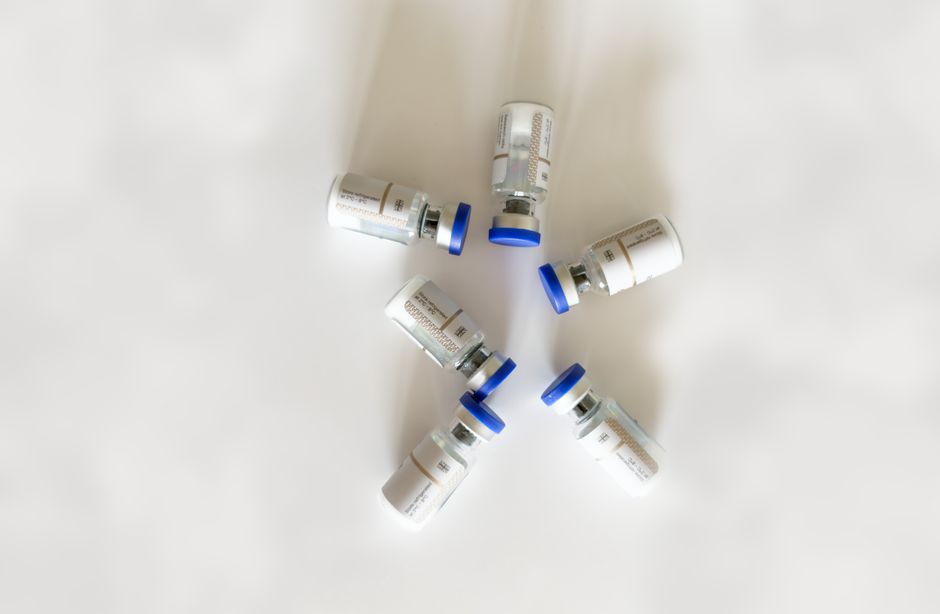
Understanding the contrast helps clarify why water solubility matters.
- Peptide hormones: Water-soluble, travel in blood, bind to cell surface receptors, use second messengers.
- Steroid hormones: Lipid-soluble, travel bound to carrier proteins, diffuse through cell membranes, bind to intracellular receptors.
- Amine hormones: Mostly water-soluble (like catecholamines), though some have lipid-soluble variants.
This distinction isn't academic. It determines how hormones behave in your research model, what methods you use to detect them, and how you interpret your findings.
Common Questions About Peptide Hormone Solubility
Researchers often ask the same questions about peptide hormones. Here are answers to the most frequent ones.
Can peptide hormones dissolve in solvents other than water?
Yes, but with caveats. While peptide hormones are primarily water-soluble, they can dissolve in some polar organic solvents like ethanol or DMSO at low concentrations. However, these conditions may affect peptide stability or structure. For most research applications, aqueous solutions are preferred because they maintain biological relevance and peptide integrity.
Does water solubility change as a peptide hormone chain gets longer?
Generally, longer peptide chains remain water-soluble if they contain sufficient polar and charged residues. However, longer chains can become less soluble if the amino acid composition shifts toward hydrophobic (water-repelling) residues. Chain length alone doesn't determine solubility; amino acid composition does.
How does pH affect peptide hormone solubility?
pH has a significant impact. Amino acids in peptides carry ionizable groups. Changing pH alters the charge state of these groups, which changes solubility. Each peptide has an optimal pH range where it remains soluble and stable. Working outside this range can cause precipitation or aggregation.
Why do some peptide hormone preparations use buffers instead of plain water?
Buffers stabilize pH and help maintain peptide solubility and structure over time. Plain water can shift pH as dissolved gases enter or leave the solution, destabilizing the peptide. Buffered solutions keep conditions consistent, which is especially important when you're storing peptides for use across multiple experiments. This is one reason Echelon Labs emphasizes batch documentation and storage specifications—proper preparation and handling protect the quality of your research material from day one.