
If you're sourcing peptide standards for your lab, you need to know exactly how mass spectrometry (MS) verification standards work and what documentation actually proves your material is what the supplier claims it is. Mass spectrometry peptide verification standards are analytical benchmarks that confirm peptide identity, purity, and sequence accuracy through precise molecular weight measurement and fragmentation analysis. This matters because one contaminated or mislabeled batch can tank weeks of experimental work.
Let's walk through what these standards are, why they matter for your research, and how to actually evaluate suppliers before you buy.
What Are Mass Spectrometry Peptide Verification Standards?
A mass spectrometry peptide verification standard is a reference compound with a known molecular weight, sequence, and purity level that your lab uses to calibrate, validate, and verify MS equipment and methods. Think of it as a fingerprint for your peptide batch.
Related: How to Verify Peptide Purity with HPLC: The Complete Guide
Related: Best Peptide Sterility & Endotoxin Testing Standards for Lab Safety
Related: Peptide Endotoxin Testing Requirements Lab Guide
Related: GMP-Like Peptide Synthesis Quality Assurance: Standards & Testing
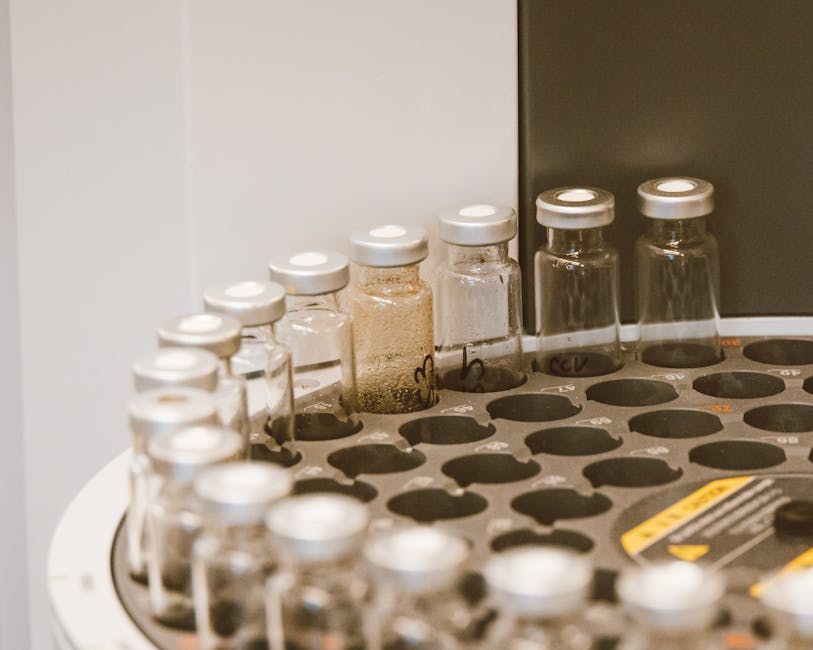
When you run a peptide standard through LC-MS (liquid chromatography-mass spectrometry), the instrument measures the exact mass of the peptide molecule and breaks it into smaller fragments. The resulting mass spectrum acts as proof of identity and purity. If your sample produces the same spectrum as the standard, you know your material is authentic and consistent.
This is especially critical in quantitative proteomics, where you're measuring how much of a specific protein or peptide exists in a biological sample. Without validated standards, your quantification numbers become meaningless. You're literally comparing unknown quantities to nothing.
Why Peptide Verification Standards Matter for Your Research
Here's the honest truth: if you're not using third-party verified standards, you're guessing. Your mass spectrometry data is only as trustworthy as the reference material backing it up.
Peptide standards serve three critical functions in a research environment:
- Identity confirmation: MS standards prove your peptide is exactly what you ordered, not a similar molecule or partial degradation product.
- Purity assessment: The mass spectrum shows impurities, synthesis byproducts, or aggregation. A reputable supplier will document this in their Certificate of Analysis (COA).
- Method validation: You can't publish quantitative data without demonstrating that your analytical method (your MS protocol) works consistently with a known reference material.
Peer-reviewed publications in fields like proteomics, biomarker discovery, and post-translational modification analysis now routinely require evidence that your peptide standards passed independent MS verification. Journal reviewers check for this. If your COA is vague or from an internal-only test, your paper gets sent back for revision.
Core Standards You Should Know: LC-MS, Phosphopeptides, and P-VIS
Not all peptide verification approaches are the same. Your research needs will determine which standard type is right for you.
LC-MS Standards: These are the most common. Your peptide is dissolved, separated by liquid chromatography, and ionized for mass analysis. The result is a precise molecular weight and a retention time that can be reproduced. LC-MS standards are the backbone of quantitative proteomics and are your go-to for general peptide verification.
Phosphopeptide Standards: If you're studying post-translational modifications (phosphorylation, acetylation, etc.), standard MS verification isn't enough. Phosphopeptide standards specifically measure how well your lab can detect and quantify modified amino acids. These are significantly more specialized and command higher prices, but they're essential if PTM analysis is central to your work.
P-VIS (Peptide Validation In Silico): This is a computational framework that objectively scores how confident you can be in a peptide spectrum match (PSM). Instead of just eyeballing the data, P-VIS applies measurable thresholds to peptide identifications. It's becoming more common in rigorous proteomics labs and helps standardize what "verification" actually means across different research groups.
What to Look For in a Peptide Verification Standard

When you're evaluating suppliers, you need to check specific boxes before you commit to a purchase. Cut corners here, and you're buying blind.
Related: Qualified Professional Peptide Supplier Criteria: What to Look For
HPLC Purity ≥98%: This is the minimum acceptable threshold. Your supplier should provide an HPLC chromatogram showing a single, dominant peak. If you see multiple peaks or purity below 98%, walk away. Impurities skew your MS data and introduce experimental noise.
Lot-Matched Certificates of Analysis: The COA must match the exact batch number of your peptide. A generic "our typical purity is 99%" is worthless. You need documentation specific to lot XYZ-12345 that shows HPLC results, exact mass verification, and moisture content for that specific batch. Echelon Labs includes lot-specific COAs with every order, so you never have to guess whether your material was actually tested.
Independent Third-Party Testing: The best suppliers send samples to independent analytical labs for verification. This removes bias and gives you confidence that someone outside the manufacturing company verified the data. Internal testing alone is a red flag.
Mass Spectrometry Verification Report: A quality supplier will include an actual MS report showing the molecular ion peak, fragmentation pattern, and confirmation that the observed mass matches the theoretical mass. This should be dated within 6 months of your purchase.
Procurement Best Practices for Peptide Standards
You've identified a supplier and you're ready to order. Here's how to protect your research investment.
Verify documentation before purchasing: Request the COA and MS report before you commit. Don't wait until the peptide arrives to check. If the supplier can't provide recent documentation, that's your answer right there. You're working with someone who doesn't prioritize traceability.
Related: Peptide COA Documentation Compliance Checklist for Labs
Check the test dates: HPLC and MS reports should be recent, ideally within 3-6 months of your purchase. Older reports may not reflect current conditions, especially if the peptide has been stored improperly or if formulation batches have changed.
Related: Best Research Peptide Batch Coding System for Lab Traceability
Require lot-matching documentation: Never accept generic certificates. The batch number on your peptide vial must appear on your COA and MS report. This creates an unbreakable chain of custody.
Store peptides correctly after arrival: Even perfect peptides degrade under wrong conditions. Most lyophilized peptides should be stored at -20°C or colder, away from light and moisture. If you store a -20°C peptide at room temperature, your verification standards become meaningless after a few weeks.
Related: Lyophilized Peptide Vial Storage: Complete Guide
How to Evaluate Supplier Credibility
Not every company selling peptides actually cares about verification standards. Some prioritize speed and cost over documentation. You need to identify the trustworthy partners before you depend on them for critical research materials.
Red flags:
- Supplier cannot provide third-party COAs or MS reports.
- Documentation is generic and not lot-specific.
- Testing data is older than 6 months.
- No information about storage conditions or shelf life.
- Supplier makes vague claims like "high purity" without numerical support.
Green flags:
- Every batch comes with an independent COA showing lot number, purity, and mass spec confirmation.
- Supplier publishes standard operating procedures for testing and quality control.
- Documentation includes retention times, peak symmetry, and moisture content.
- Supplier is transparent about which batches failed testing and weren't released.
- Clear communication about storage requirements and batch stability timelines.
When you're sourcing peptide standards, you're not just buying a chemical. You're buying documentation, traceability, and reproducibility. Echelon Labs builds their entire business around this principle: every peptide comes with comprehensive third-party testing, lot-specific COAs, and mass spectrometry verification reports. It's the only way to run serious research.
Common Mistakes Labs Make with Peptide Verification Standards
Mistake 1: Buying from the cheapest supplier. Peptide standards have narrow profit margins. If the price seems too good to be true, the documentation probably is too. You're sacrificing reproducibility to save a few dollars. Your time is worth more than that.
Mistake 2: Assuming in-house testing equals independent verification. Manufacturers have financial incentive to report high purity. Independent third-party labs have no such incentive. Always demand external verification.
Mistake 3: Neglecting storage conditions after arrival. A perfect peptide stored at room temperature degrades. Your verification standards only apply if you maintain the conditions specified in the COA.
Mistake 4: Using outdated standards in ongoing experiments. Peptides have shelf lives. If you're running a long-term study over months or years, you need to re-verify your standards periodically. A 2-year-old batch may have degraded, even if stored correctly.
Mistake 5: Not comparing MS data to theoretical predictions. Always check that your observed mass matches the theoretical mass calculated from the peptide sequence. Even high-purity peptides can be the wrong sequence if synthesis went wrong.
How Mass Spectrometry Actually Confirms Peptide Identity
Understanding the mechanism helps you evaluate supplier claims more intelligently.
When your peptide enters the mass spectrometer, it gets ionized (given an electrical charge). The instrument then measures the mass-to-charge ratio (m/z) of that ion. For a peptide with a known sequence, you can predict the exact mass it should have using amino acid composition.
If your observed mass matches the theoretical mass within a tight tolerance (typically within 5 ppm or parts per million for high-resolution instruments), you've confirmed identity. If there's a significant deviation, something is wrong: wrong sequence, contamination, or degradation.
Beyond the molecular ion peak, MS instruments also fragment the peptide and measure the masses of the resulting pieces. This fragmentation pattern is like a secondary fingerprint. Each peptide sequence produces a predictable fragmentation pattern. If your observed fragmentation matches the predicted pattern, you have high confidence in both identity and purity.
That's why peer-reviewed journals trust MS data. It's not opinion or approximation. It's physics.
Why Your Research Credibility Depends on Peptide Verification Standards
Reviewers and peer researchers will examine your methods section and ask: "Where did you get your peptide standards? Who tested them? Can I see the COA?"
If you can't answer those questions with confidence, your entire study becomes suspect. Reviewers may reject your paper or request significant revisions asking for independent verification of your materials.
Publishing quantitative proteomics data without verified standards is like publishing clinical trial results without showing that your lab equipment was calibrated. It's not credible.
That's why established research labs and institutions partner with suppliers who understand this. They're not looking for the cheapest peptides. They're looking for the most thoroughly documented ones. When you partner with a supplier serious about verification standards, you're protecting your own research credibility and your lab's reputation.
Related: Best Research Institution Peptide Suppliers 2026: Top 5 Ranked
Getting Started with Peptide Verification Standards
If your lab is moving toward more rigorous mass spectrometry work or publishing research that requires validated peptide standards, here's your action plan:
- Define exactly which peptides you need and for what application (quantitative proteomics, method development, phosphopeptide analysis, etc.).
- Research suppliers who publish third-party COAs and MS verification reports. Ask for examples before you commit.
- Request recent documentation (within 6 months) for the specific lots you're interested in.
- Confirm that their storage and shipping conditions match your lab's capabilities.
- Order a small batch first, verify it meets your requirements, and then scale up if it does.
Starting with a trusted supplier who prioritizes verification standards from the beginning saves you time, money, and credibility down the road. Look for partners who treat documentation as seriously as you do, because in research, documentation is everything.
Why does HPLC purity need to be at least 98%?
HPLC (high-performance liquid chromatography) separates your peptide from impurities based on chemical properties. If purity is below 98%, you have contaminating substances that will interfere with your MS analysis, skew your quantification, and introduce experimental noise. At 98% or higher, your signal-to-noise ratio remains clean and reproducible. Lower purity = lower confidence in your results.
What's the difference between a lot-specific COA and a generic certificate?
A lot-specific COA includes the exact batch number, manufacturing date, testing date, and results for that specific production run. A generic certificate just says "our peptides are typically 99% pure" without linking to your actual batch. Generic certificates are marketing documents. Lot-specific COAs are proof. Always demand the specific one.
How long are mass spectrometry verification reports valid?
MS verification reports are most trustworthy within 6 months of the test date. After that, peptide degradation, storage issues, or batch drift may have occurred. For long-term studies spanning months or years, re-verify your standards periodically using fresh aliquots. If you're using a peptide standard from 2 years ago, get it retested before you trust it in new experiments.
Can I verify my own peptides instead of relying on supplier documentation?
Yes, but it's expensive and time-consuming. You'd need to purchase MS reference materials, run your own standards, and maintain detailed documentation. Most labs outsource this to independent analytical labs or use suppliers who've already done the work. Echelon Labs provides independent verification so your lab can focus on research instead of quality control. That's the trade-off: you're paying for documentation and traceability, which is far cheaper than duplicating the testing yourself.